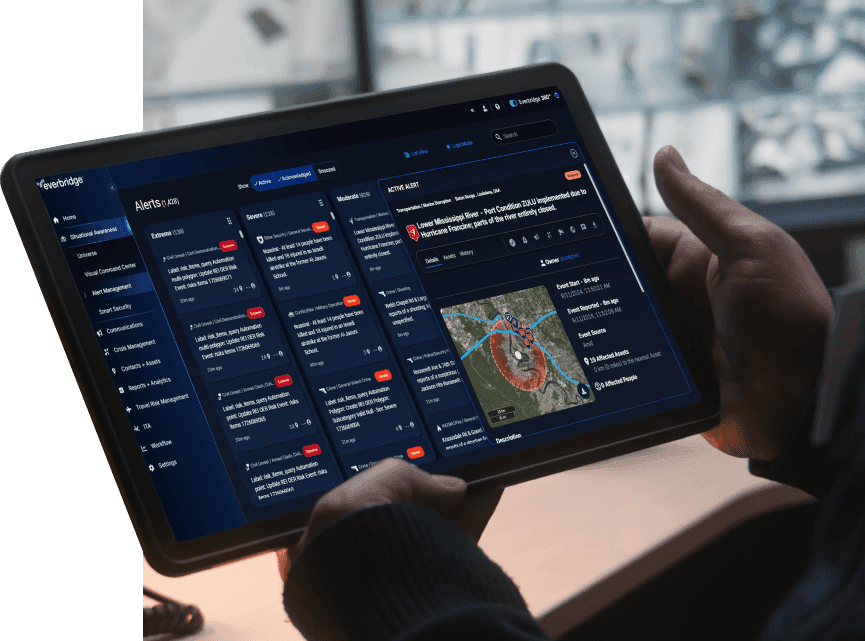
Public Warning
Communicate information and alert residents and visitors of imminent and developing emergencies with a unified multi-channel, intelligent population alerting platform.

What is a public warning system?
Everbridge Public Warning is a public warning system that helps governments and emergency authorities send urgent, location-aware alerts to people at risk during imminent or developing emergencies. It combines modern mobile alerting with traditional communication channels so residents, visitors, and responders can receive clear instructions quickly and at scale.
- Serves residents and visitors: Reach people in affected areas, including citizens, tourists, commuters, and other transient populations.
- Uses multiple alerting channels: Send warnings through cell broadcast, location-based SMS, address-based SMS, and legacy media such as TV, radio, sirens, email, voice calls, and social media.
- Improves speed and coverage: Deliver time-critical messages to millions of people in seconds across targeted geographic areas.
- Supports compliance: Help public authorities meet population alerting requirements, data protection expectations, and public safety mandates.
Key features of Everbridge Public Warning
Reach more people, faster, with targeted alerts, multi-language communication, real-time visibility, and integrated public warning operations.

Multi-channel population alerting
Reach people through cell broadcast, location-based SMS, and address-based SMS to support fast, targeted communication during emergencies.

Precise targeting and inclusive messaging
Use Device-Based Geo-Fencing (DBGF) and multi-language alerting to deliver relevant instructions to the right people in the right language.

Real-time situational awareness
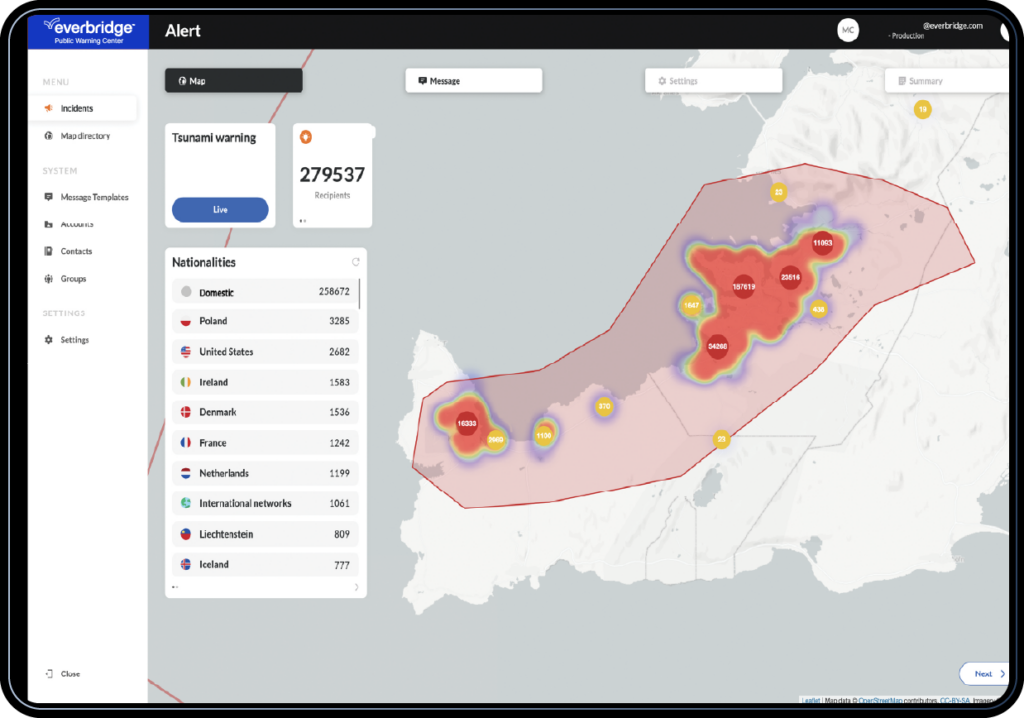
Visualize incident impact, crowd movement, device density, and population patterns to support faster, better-informed decisions.

Integrated, compliant operations
Connect with existing emergency systems and infrastructure while supporting GDPR and EECC alignment through one provider, one solution, and one support model.
Population alerting platform
- Comprehensive, flexible, and modular public warning system
- Meets the needs of all countries, small or large
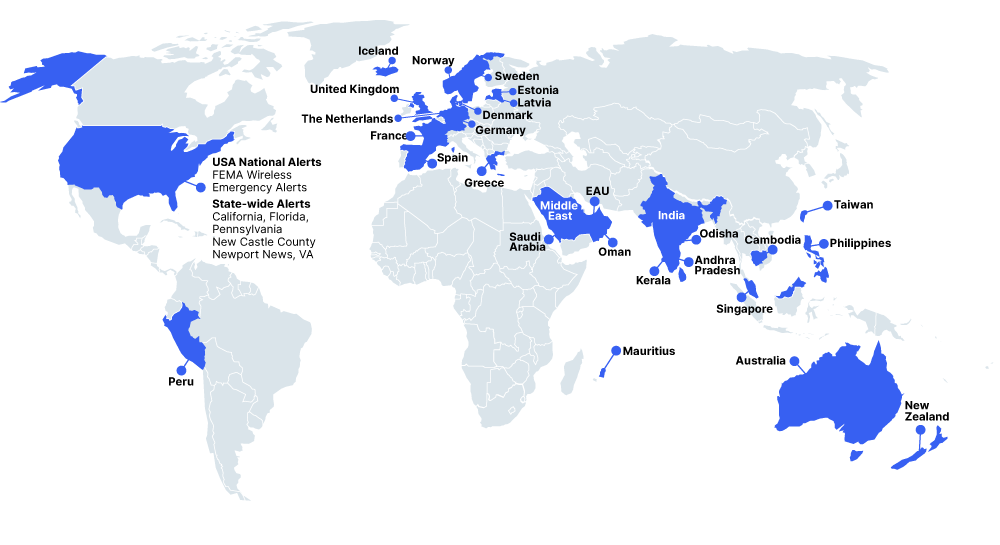
- Helps to protect more than 800 million people across all five continents in more than 25 countries
- Complies with international standards and PII data protection, including EECC Article 110 and GDPR
Innovations with Device-Based Geo-Fencing
Over the years, public warning systems have evolved to leverage Cell Broadcast to send life-saving messages to mobile phones, incorporating innovative technologies such as Device-Based Geo-Fencing (DBGF) to enhance their effectiveness.
To learn more about the evolution of public warning systems and delve into Device-Based Geo-Fencing, its significance, and the future of public safety measures, download our white paper, “Evolution of public warning systems: Innovations with Device-Based Geo-Fencing.”

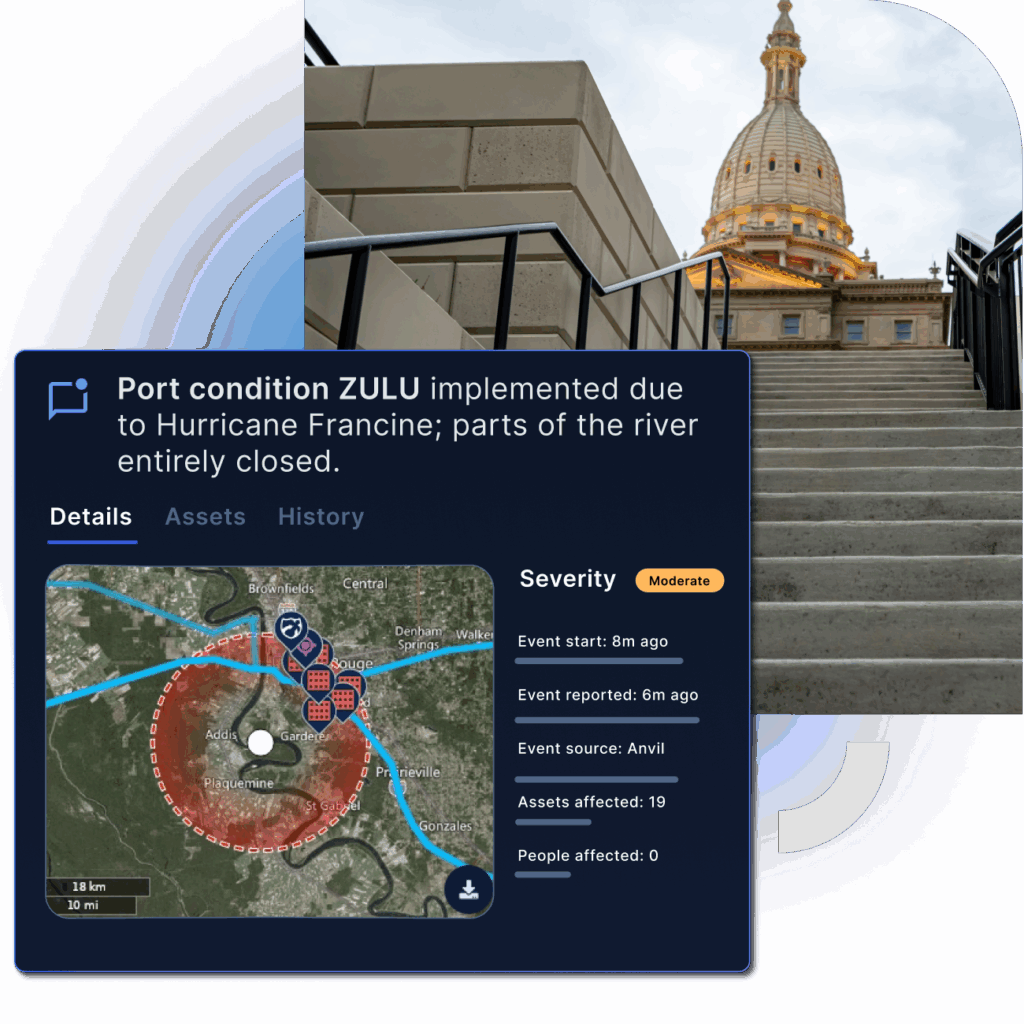
Reach millions in seconds
Everbridge is the only supplier that can offer both best of breed technologies.
- Maximize reach and performance with cell broadcast, location-based SMS, and address-based SMS
- Gain situational awareness and visualize crowd movements
- Communicate with people in their native language
- Partner with one provider, one solution, one support desk
Trusted worldwide
More deployments than any other provider
Everbridge Public Warning has been trusted and deployed by more national governments across the world than any other solution, including the United Kingdom, Germany, Norway, Sweden, Spain, the Netherlands, Greece, Iceland, Estonia, Singapore, Peru, Australia, New Zealand, and several coastal states in India.
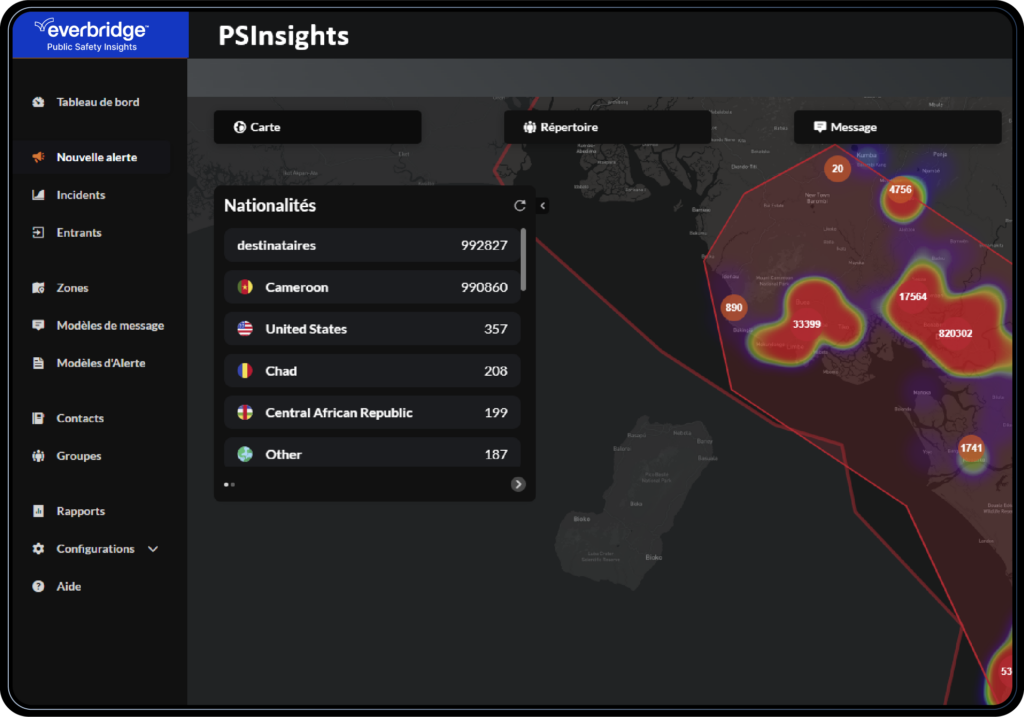
Gain deep visibility into major incident scenes
Everbridge provides public authorities with the information needed to quickly assess the public safety impact of situations in real-time, enabling them to make more informed decisions and thereby reducing the impact of incidents. It gives public authorities the ability to:
- Visualize relevant data, information, and intelligence, enabling them to deploy the most effective response and achieve better outcomes
- Receive risk input data to assess the potential impact
- Monitor real-time density of mobile devices with location
- See a breakdown of devices by nationality
- View live crowd movements in the affected area
- Plug into any existing population alerting system
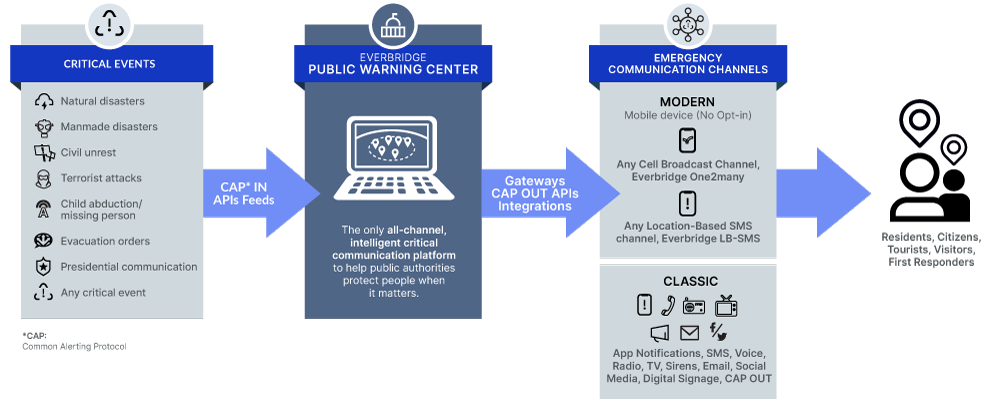
One platform – how it works
The platform seamlessly combines modern mobile phone alerting capabilities with classic communication channels such as email, voice calls, sirens, radio, TV, social media, digital signage, and opt-in address-based systems.
Why Everbridge?
Since 2002, we have pioneered public alerting technologies, and to date Everbridge has been awarded 16 patents for innovation. Everbridge experts developed the first cell broadcast and location-based SMS solutions and are active in driving standardization of public warning worldwide through 3GPP, ATIS, ETSI, and EMTEL.
National alerting systems
eBook public warning systems

Public Warning FAQs
A public warning system helps governments and emergency management organizations rapidly notify people during emergencies such as severe weather, natural disasters, public safety threats, or infrastructure incidents. These systems use mobile networks, location-based technologies, and multi-channel communications to deliver targeted alerts and safety instructions to affected populations in real time.
Public Warning is a unified, multi-channel population alerting platform designed to communicate information and alert residents and visitors during emergencies.
Trusted by national governments in over 25 countries, including the UK, Germany, Australia, New Zealand and Singapore, Public Warning protects more than 800 million people globally.
Public Warning combines cell broadcast, location-based SMS, and address-based SMS with traditional communication channels like email, voice calls, sirens, radio, TV, and social media.
Passive data from mobile networks is used to identify devices in a specific area without tracking or storing individual locations. Public warning deployments can be configured to minimize or avoid the collection of personally identifiable information, depending on deployment model, regulatory requirements, and communication method. Privacy protections, governance controls, and configurable operational policies help organizations balance public safety objectives with privacy and data protection considerations.
Yes, it uses data already stored by mobile operators and ensures no PII is exposed or shared with third parties.
Cell broadcast sends messages to all compatible mobile devices connected to specific cellular towers without requiring phone numbers. Location-based SMS targets devices detected within a geographic area using mobile network data, while address-based SMS sends alerts to predefined contact records associated with known addresses or subscriber databases.
Everbridge supports high-volume public warning capabilities designed to help authorities distribute alerts rapidly across large populations during emergencies. Delivery speed depends on communication method, mobile network infrastructure, geographic scope, and operational conditions, but the platform is designed to support large-scale, time-sensitive emergency communications during critical public safety incidents.
Yes. Public warning technologies such as cell broadcast and certain location-based alerting methods can help authorities reach roaming visitors and tourists connected to local mobile networks without requiring prior opt-in. This capability helps improve public safety communications for transient populations during emergencies and rapidly evolving incidents.
Device-Based Geo-Fencing (DBGF) enables alerts to be delivered to mobile devices based on whether the device itself is located within a defined geographic area. This approach can improve targeting accuracy, reduce over-alerting, and help organizations notify affected populations more precisely during emergencies and public safety incidents.
Everbridge supports configurable governance controls, auditability, security practices, and operational workflows designed to help organizations align with GDPR and EECC Article 110 requirements. Compliance responsibilities may vary by deployment model, national regulations, mobile network integration approach, and organizational governance requirements associated with public warning operations.
Everbridge supports integrations with mobile network operators, public safety systems, GIS platforms, emergency management technologies, and national alerting infrastructures. These integrations help authorities coordinate emergency communications, improve operational interoperability, and support targeted public warning delivery across existing operational and telecommunications environments.
Implementation timelines for national public warning deployments vary based on regulatory requirements, mobile network integrations, geographic scope, infrastructure readiness, and operational complexity. Many deployments involve phased implementation approaches that include integration testing, operational validation, stakeholder coordination, training, and public safety readiness exercises before full-scale deployment.